

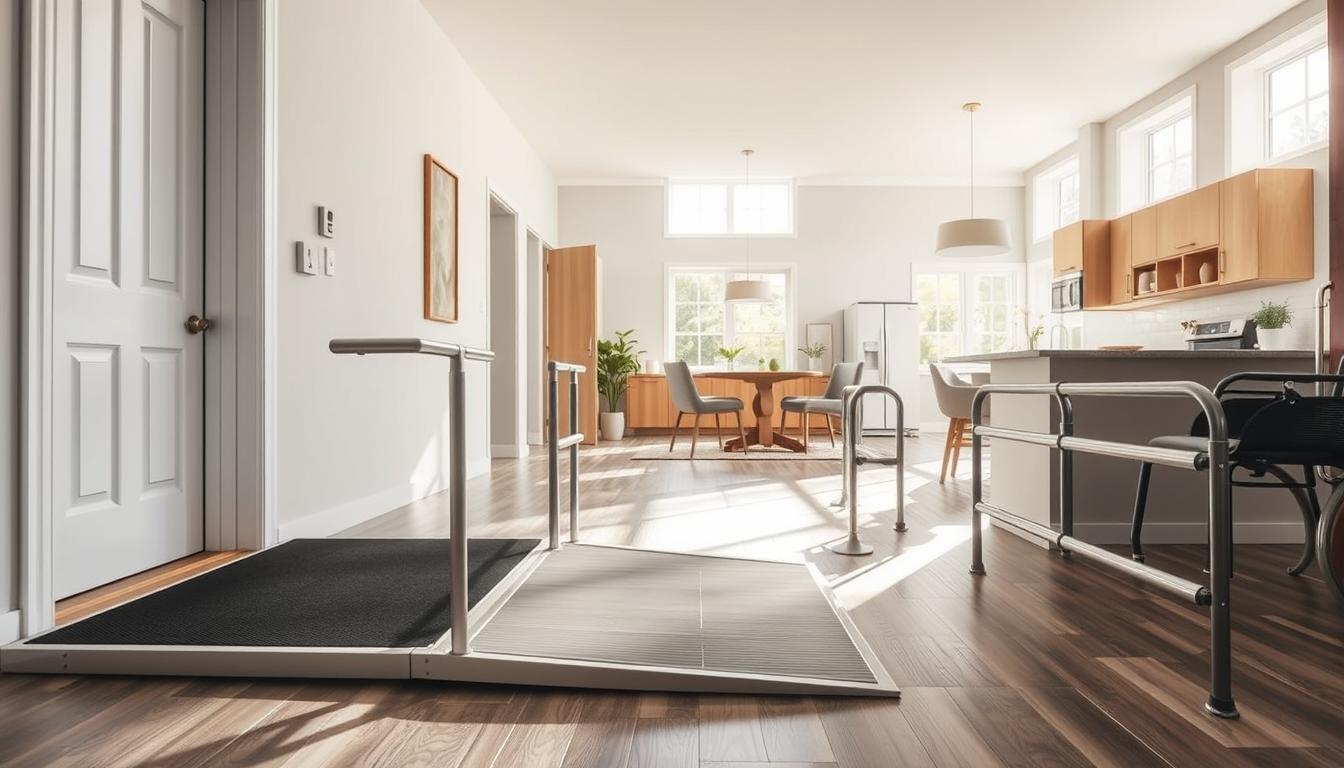
Are you wondering if your home is safe for everyone? Creating a welcoming and safe environment is key for families with elderly members or those with disabilities.
Making your home more accessible can really improve life quality. Simple changes like installing ramps or stair glides help a lot. Adding bathroom aids also makes a big difference. These steps not only make your home safer but also help people stay independent.
By making these changes, you can turn your home into a cozy and safe place. In this article, we’ll show you how to make your home more accessible. You’ll get useful tips and see before-and-after examples.
Key Takeaways
- Simple modifications can greatly improve home safety and accessibility.
- Installing ramps and stair glides can enhance mobility.
- Bathroom aids can significantly promote independence.
- Practical tips and before-and-after examples will be provided.
- Enhancing home accessibility improves the quality of life for all inhabitants.
The Growing Need for Home Accessibility
As more people get older, they want to stay in their homes. They want to keep their independence and live well in their own space.
Common Mobility Challenges in American Homes
Many homes in America face big challenges for people with mobility issues. Doors are too narrow, stairs are too steep, and bathrooms are not safe for wheelchairs.
| Challenge | Accessibility Solution |
|---|---|
| Narrow Doorways | Widening doorways to 36 inches or more |
| Steep Stairs | Installing stair glides or lifts |
| Non-accessible Bathrooms | Installing walk-in tubs or roll-in showers |
Proactive vs. Reactive Accessibility Planning
Planning ahead is key. It helps make homes safer and prevents accidents.
“A proactive approach to home accessibility not only improves the quality of life for individuals with disabilities but also enhances overall home safety.” – Accessibility Expert
Knowing the challenges and planning ahead makes homes safer and more accessible for everyone.
Assessing Your Current Home Layout
Looking at your home’s layout is the first step to make it better for everyone. You need to check each room and find any barriers to moving around.
Room-by-Room Accessibility Audit Checklist
To do a good audit, use this checklist:
1. Are doorways wide enough (at least 32 inches) for mobility aids like wheelchairs or walkers?
2. Are hallways clear of obstacles and at least 42 inches wide?
3. Are there ramps or stair glides for navigating between floors?
4. Are bathroom facilities equipped with grab bars, a walk-in tub, or a roll-in shower?
Identifying High-Priority Modification Areas
After the audit, find areas that need quick fixes. High-priority areas often include bathrooms. Here, slip-resistant flooring and strategic grab bar placement are key for safety.
For example, adding a walk-in tub or a roll-in shower makes bathrooms more accessible. Also, ramps or stair glides help move between floors.
Exterior Access Solutions: Ramps and Entries
Making your home’s outside accessible is key. It’s not just about being able to get in. It’s also about keeping your home looking good. Ramps and entry changes help make your home welcoming and safe for everyone.
Permanent vs. Portable Ramp Installation Options
Homeowners can choose between permanent and portable ramps. Permanent ramps are fixed and strong. They can be made to fit your home’s look and yard. Portable ramps are easy to move and change. They’re great for renters or those with short-term needs.
Choosing between permanent and portable ramps depends on a few things. How often you’ll use it, your home’s style, and what you like are important. Picking the right one means your home looks good and meets your needs.
Case Study: The Johnson Family’s Front Entrance Transformation
The Johnson family’s story shows how ramps can change a home’s entrance.
Before: Steep Steps Creating Daily Barriers
The Johnsons’ home had steep steps that were hard for their elderly mom to get up. The steps made it hard for her to move around and were unsafe.
After: Elegant Ramp Integration with Landscaping
The Johnsons got a permanent ramp that fits well with their yard. The ramp is both useful and looks good. It matches their home’s design. The contractor said, “The ramp made the home safer and more attractive.”
“The transformation was remarkable. The new ramp is not only safe and accessible, but it also looks like it was always part of the home’s design.” – John Johnson
This story shows how ramps can make a home better. They improve access and the home’s look.
Navigating Between Floors: Stair Glide Systems
Stair glide systems have changed how we move between floors at home. They make it easier and safer. For those who want to stay in their homes as they age, these systems are a great help.
Straight vs. Curved Stair Lift Installation Considerations
Choosing between a straight or curved stair lift is a big decision. Straight stair lifts are cheaper and easier to put in. They work best for simple stairs. Curved stair lifts are made for complex stairs, fitting perfectly.
What you choose depends on your stairs and what you need. Always talk to a pro to pick the right one for your home.
Weight Capacity and Safety Feature Options
It’s important to think about how much weight the stair glide can hold. Most can handle 250 to 400 pounds. You need to make sure it can support you safely. Also, today’s stair glides have safety features like seatbelts and sensors.
Case Study: The Martinez Family’s Multi-Level Home Adaptation
The Martinez family had a big problem when Mrs. Martinez couldn’t move as well. Their home had stairs that made it hard for her to get around.
Before: Inaccessible Upper Floor Bedrooms
Before getting a stair glide, Mrs. Martinez couldn’t get to her bedrooms upstairs. The family had to turn their living room into a bedroom for her. This wasn’t good for anyone.
After: Seamless Vertical Mobility Solution
With a curved stair glide, the Martinez family’s life got much better. Mrs. Martinez could now easily go up and down stairs. This made her very happy and independent again.
The stair glide was a huge change for the Martinez family. It let them stay in their home safely and comfortably. It made Mrs. Martinez’s life better and gave the whole family peace of mind.
Bathroom Accessibility Transformations
Making bathrooms more accessible can really help people with mobility issues. A bathroom makeover for accessibility boosts safety and freedom.
Walk-in Tubs and Roll-in Shower Installation Process
Adding walk-in tubs or roll-in showers is a big step up for bathroom access. These changes remove the danger of slipping over the edge of a regular tub. The setup needs careful planning to make sure it’s safe and comfy for users.
Key Considerations:
- Space assessment to find the right size and type of fixture. Plumbing adjustments for the new setup. Safety features like grab bars and slip-resistant floors.
Strategic Grab Bar Placement for Maximum Safety
Grab bars are vital for bathroom safety. They help people get in and out of the shower or tub, and when using the toilet. Where you put them is very important for their usefulness.
| Location | Purpose |
|---|---|
| Near the toilet | Helps with sitting down and standing up |
| In the shower or bathtub | Supports balance while bathing |
| Outside the shower or bathtub | Helps with getting in and out of the bathing area |
Case Study: The Wilson’s Complete Bathroom Renovation
Before: Hazardous Traditional Bathroom Layout
The Wilsons’ old bathroom was risky, with a high bathtub edge and no support bars.
After: Safe and Dignified Independent Bathing Space
The makeover added a roll-in shower with a bench, grab bars, and slip-resistant floors. Now, Mrs. Wilson has a safe, accessible, and dignified place to bathe, greatly improving her independence.
Kitchen Modifications for Enhanced Accessibility
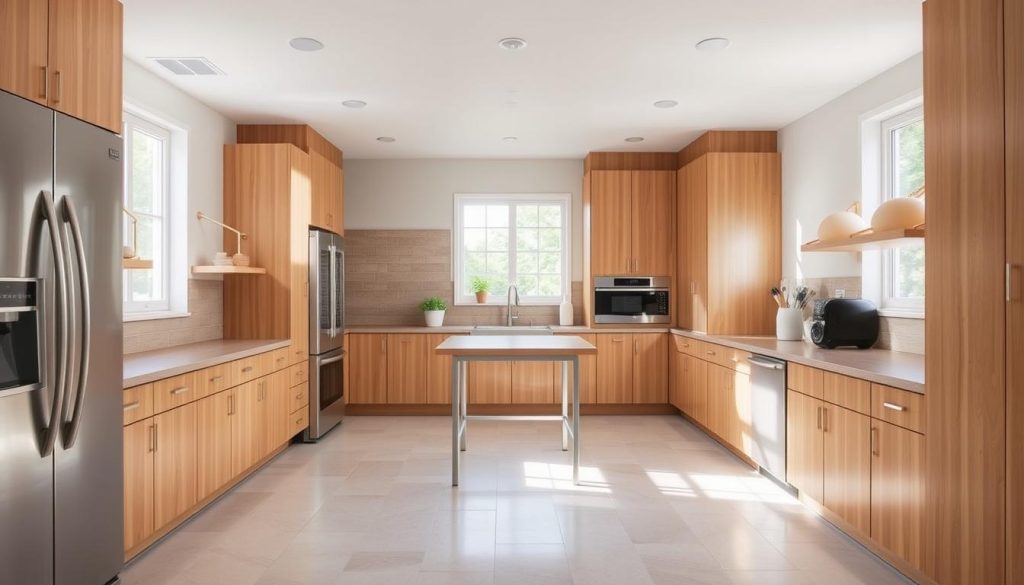
An accessible kitchen is key for staying independent at home. Making your kitchen more accessible can greatly improve home safety. It also makes cooking easier for all, no matter their age or how they move.
Adjustable Height Countertops and Accessible Cabinets
Installing adjustable height countertops is a big help. They let users switch between standing and sitting while cooking. This makes cooking more comfortable and less tiring.
Also, adding cabinets with pull-out shelves and soft-close drawers is smart. These features make it easier to get kitchen items, especially for those with mobility aids.
Appliance Selection and Placement Strategies
Picking the right appliances and where to put them is very important. Choose ones with controls that are easy to use, like front-control ranges and side-by-side refrigerators. This makes a big difference.
Also, make sure there’s enough space around appliances for easy access. This is especially important for wheelchair users.
Case Study: The Thompson’s Kitchen Redesign for Wheelchair Access
The Thompson family redesigned their kitchen to make it more accessible. They installed adjustable countertops and lowered sink areas. This made the kitchen more welcoming for their wheelchair-bound family member.
Before: Unreachable Storage and Inaccessible Work Areas
Before the redesign, the Thompsons had trouble with high cabinets and countertops. These made cooking hard. The kitchen layout also made it hard for their family member with mobility needs to use it.
After: Functional Cooking Environment for All Users
After the redesign, the kitchen became a great place for everyone. The changes made it safer and more fun to cook. This shows how important it is to think about kitchen design.
Doorway and Hallway Widening Projects
For those wanting to age in place or improve disabled access, widening doorways and hallways is key. These changes make homes easier to move around in. They help people get around safely and comfortably.
Standard Accessibility Measurements and Building Codes
It’s important to follow standard measurements and local building codes for these projects. Doorways should be at least 32 inches wide for wheelchair access. Hallways need to be 36 inches wide for easy movement.
Following local building codes is a must. It ensures the work is done right, making the home safer and more functional.
Pocket Door Installation vs. Traditional Door Removal
There are two ways to widen doorways: pocket door installation and traditional door removal. Pocket doors slide into the wall, saving space. But, they need big wall changes and might not fit all homes.
Traditional door removal makes openings wider. But, it might need extra framing to hold up the walls. The choice depends on the home’s design and what you want to achieve.
Case Study: Creating Open Pathways Throughout the Home
The Smith family’s home renovation is a great example. They made their home more accessible by widening doorways and hallways.
Before: Restrictive Passage Areas Limiting Mobility
The Smith’s home had narrow spaces that made it hard to move. This was especially tough for their elderly mother who used a wheelchair.
After: Freedom of Movement in All Living Spaces
After the changes, the family noticed a big difference. They could move around easily. Their mother could now get around the home on her own, making it easier to stay in their home as they age.
Home Accessibility Safety Features and Tips
Keeping your home safe and easy to get around is very important. This is especially true for families with older or disabled members. Having the right safety features can help avoid accidents and make everyone feel better.
Preventing Falls with Proper Lighting and Flooring Selection
Stopping falls is a big part of home safety. Good lighting and flooring choices are key. Bright lights in hallways, stairs, and bathrooms can help avoid trips.
Also, pick flooring that won’t slip, like textured tiles or hardwood. Think about using motion-sensor lights to light up dark spots automatically.
Emergency Response System Installation Options
Having a quick way to get help in emergencies is crucial. There are many options, like wearable alert devices and home monitoring systems. These can call for help or alert family or caregivers fast.
Maintenance Schedules for Accessibility Equipment Longevity
Keeping accessibility gear in top shape is key. Set up a regular check-up schedule. This helps catch problems early, like with stair lifts and grab bars.
Case Study: The Garcia Family’s Whole-Home Safety Upgrade
The Garcia family made their home much safer. They put in stair lifts, made doorways wider, and got a smart home system. These changes made their home safer and easier to use, improving their life a lot.
Smart Home Technology Integration for Accessibility
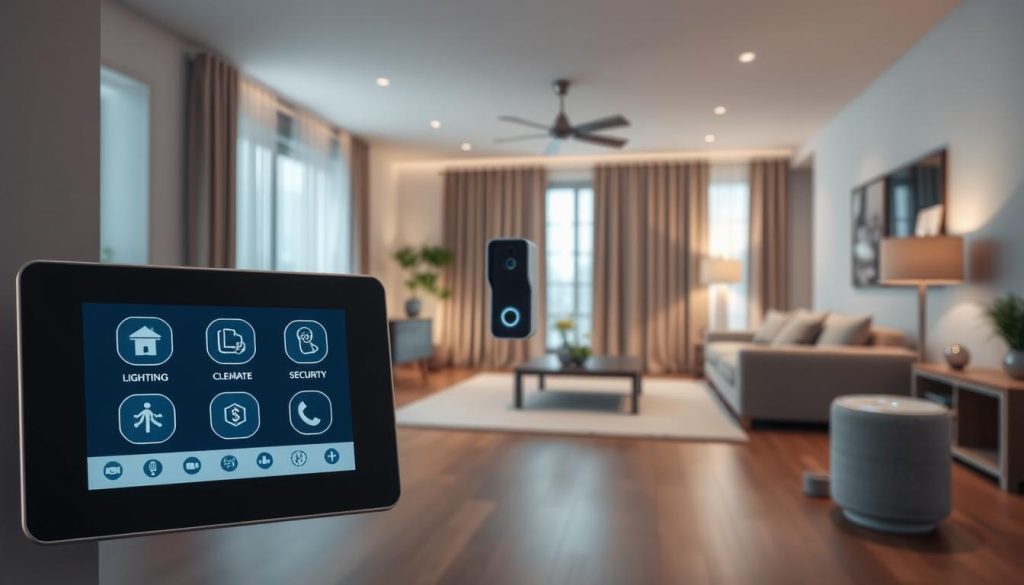
Smart home tech is changing how we make homes more accessible. It brings new solutions to everyday problems. People with mobility issues can now live more independently and comfortably.
Voice-Activated Controls and Automation Systems
Voice controls and automation lead in smart home tech for accessibility. They let users control lights, temperature, and entertainment with voice. For example, Amazon Alexa and Google Home are key for managing daily tasks.
Remote Monitoring Solutions for Caregivers
Remote monitoring solutions give caregivers peace of mind. They can check on loved ones from anywhere. These systems track falls, remind about meds, and monitor activity, ensuring care for those with mobility aids.
Case Study: Technology Enhancing Independence for the Lee Family
The Lee family’s life improved a lot with smart home tech. Voice controls and remote monitoring made their home more accessible. They gained more independence. They also added accessibility modifications like automated doors and smart lights.
Smart home tech makes homes more accessible and livable. It helps solve many mobility challenges effectively.
Professional Installation vs. DIY Accessibility Projects
Homeowners often face a big choice: go for professional installation or try DIY projects. Both have good points, but they’re different in safety, quality, and value.
When to Call the Experts: Safety and Code Considerations
For big changes like ramps or stair lifts, call the pros. They make sure it’s done right and safe. This avoids accidents and legal problems.
The Installation Process: What to Expect
Experts start by checking your home’s needs. Then, they design and set up a solution. This way, your life keeps going smoothly.
Long-term Value of Professional Accessibility Modifications
DIY might save money at first, but pros last longer and follow rules. Here’s a quick look at both sides:
| Aspect | Professional Installation | DIY Projects |
|---|---|---|
| Safety | High, meets code standards | Variable, risk of non-compliance |
| Cost | Higher upfront, long-term value | Lower upfront, potential for costly corrections |
| Quality | High, warranty often included | Variable, no warranty |
Choosing between pros and DIY depends on your needs. Think about safety, money, and how big the changes are.
Financing Your Home Accessibility Modifications
As more people need accessible homes, more ways to pay for it are available. Making your home safe and accessible is key. It helps people stay in their homes as they age.
Insurance Coverage Options for Medical Necessity
Insurance might cover home changes if they’re needed for health reasons. Check your policy and talk to your insurance company to see what’s covered.
Grants, Loans, and Tax Incentives for Accessibility Improvements
There are grants and loans to help pay for home changes. For example, the Department of Veterans Affairs (VA) has grants for veterans. Tax breaks can also help lower the cost of making your home more accessible.
Cost-Benefit Analysis of Common Accessibility Installations
Think about the cost and benefits of home changes. For example, a stair lift can make your home safer and more independent. It might even save you money on future care costs.
Looking into financing options and understanding the benefits can help you make smart choices. This way, you can stay in your home safely and comfortably as you age.
Conclusion: Creating a Future-Proof Accessible Home
Home accessibility is key for staying independent and safe at home. By making smart changes and using smart home tech, homes become more accessible. This makes living easier and safer.
Changes like ramps and wider doors make getting around easier. Bathroom and kitchen updates also help. Stair glide systems make moving around the house simpler.
Investing in these changes makes homes better now and for the future. It prepares homes for aging or mobility changes. This makes homes safer and more comfortable for years ahead.
Leave a Reply