


Are developers in Ontario aware of the new excess soil regulations? The On-site and Excess Soil Management Regulation under Ontario Regulation 406/19 has big environmental rules.
Understanding these regulations is crucial for developers. It helps them reduce the environmental harm from construction waste. Not following these rules can lead to big fines.
The regulation pushes for sustainable practices in building. By following these rules well, developers can stay green and avoid expensive penalties.
Key Takeaways
- Ontario’s excess soil regulations aim to minimize environmental impact.
- Developers must understand the regulations to avoid penalties.
- The regulation promotes sustainable practices in the construction industry.
- Effective navigation of the regulations ensures environmental compliance.
- Non-compliance can result in substantial penalties.
The Evolving Landscape of Ontario’s Excess Soil Management
Ontario’s rules for managing excess soil are changing. This affects construction projects all over the province. The new rules aim to tackle concerns about soil contamination laws and their effects on the environment.
The introduction of O. Reg.406/19 is a big step in this change. This rule has big effects on how construction sites handle excess soil.
O. Reg.406/19: On-Site and Excess Soil Management Overview
O. Reg.406/19 sets out a detailed plan for managing excess soil. It includes land use restrictions and rules for tracking and documenting soil. This rule is part of the Environmental Protection Act framework.
Key Regulatory Bodies and Their Roles
Several important groups oversee excess soil management in Ontario. The Ministry of the Environment, Conservation and Parks, and the Ontario Environmental Registry are key. Each group has a vital role in enforcing the rules.
Environmental Protection Act Framework and Implications
The Environmental Protection Act is the main law for environmental rules in Ontario. It includes rules for managing excess soil. These rules have big effects on construction projects, requiring them to follow strict guidelines to protect the environment.
By keeping up with Ontario’s changing rules for excess soil, developers can handle the complex rules better. They can make sure they follow the latest rules.
Critical Soil Regulations Compliance Requirements for Developers
Developers need to know the rules for managing excess soil to avoid environmental harm and fines. The rules are set by the Environmental Protection Act (EPA) and O. Reg. 406/19. They tell developers what they must do with excess soil.

Soil Quality Standards and Testing Protocols
Developers must follow strict soil quality standards set by the rules. They need to test the soil to check for pollutants. This ensures the soil is safe for its new use. The tests are done by labs that are approved to do this work.
- Sampling must follow the rules.
- Labs must be approved to do the tests.
- Test results must be kept for proof of compliance.
Mandatory Documentation and Record-Keeping
Keeping detailed documentation is key to showing you follow the soil rules. Developers must keep records of soil tests, how the soil is handled, and how it’s moved.
“Proper record-keeping is not just a regulatory requirement; it’s a crucial tool for ensuring that soil management practices are transparent and accountable.”
Qualified Person Assessments and Certifications
The rules say a Qualified Person (QP) must do certain checks and give certifications. The QP makes sure the soil is managed right and is safe for its new use.
| Role | Responsibility |
|---|---|
| Qualified Person (QP) | Does assessments and certifications to make sure soil rules are followed. |
| Developer | Makes sure soil management follows the rules. |
By following these rules, developers can lower the chance of breaking the rules. This helps protect the environment.
Implementation Timeline and Enforcement Mechanisms
Understanding the implementation timeline and enforcement mechanisms is key for Ontario’s excess soil rules. The rules have a clear timeline for developers. This ensures excess soil is handled in a green way.
Current and Upcoming Regulatory Deadlines
The rules have specific deadlines for following them. For example, a Qualified Person must check and approve soil plans. There are also deadlines for soil quality checks and setting up soil tracking systems.
Developers need to keep up with these deadlines to avoid trouble.
Soil Transportation and Tracking Systems
Good soil transportation and tracking systems are vital. The rules say a soil tracking system must track excess soil. This means keeping detailed records and using the right documents.
Penalties and Consequences of Non-Compliance
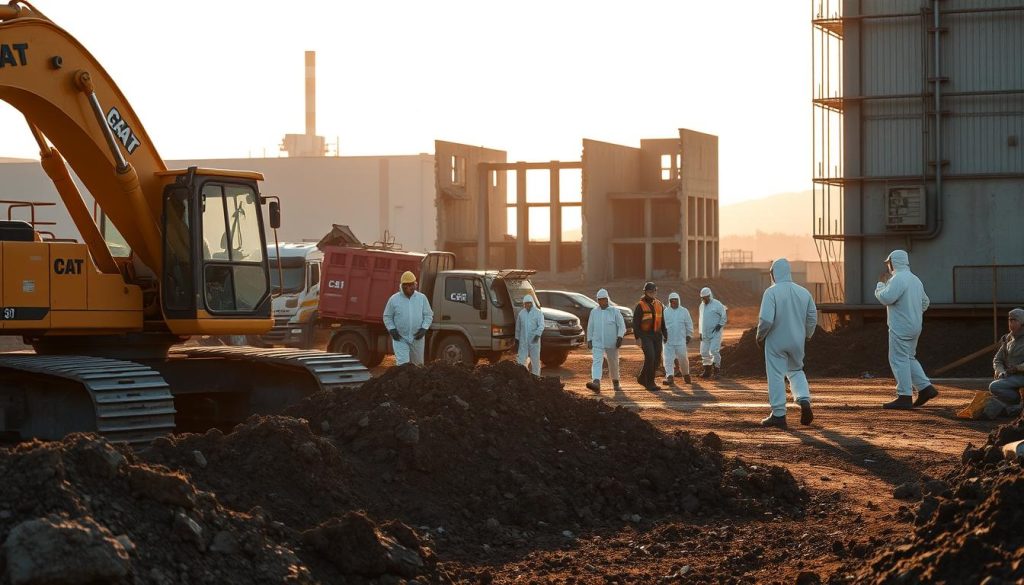
Not following the rules can lead to big penalties. This includes fines and legal trouble. It shows how important it is to follow the rules, like proper hazardous waste disposal and site remediation requirements.
Developers must focus on following the rules to avoid these problems.
In summary, knowing and following Ontario’s excess soil rules is crucial for developers. By keeping up with deadlines, using good soil tracking, and following the rules, projects can be done right and green.
Strategic Approaches to Excess Soil Management
Developers face complex rules to handle excess soil well. They need to understand these rules and use strategies that follow Ontario’s soil regulations.
Developing Comprehensive Soil Management Plans
Creating a detailed soil management plan is key for developers. This plan should cover soil quality, reuse strategies, and tracking soil. A good plan helps avoid legal issues and saves money.
Good planning means doing compliance audits well. This checks if all soil management steps are followed. It spots risks, fixes them, and keeps records of soil handling.
Cost-Effective Compliance Strategies
It’s important for developers to find ways to manage soil without spending too much. Using reuse and recycling for excess soil is a smart move. It cuts down on disposal needs and environmental harm.
Technology, like soil tracking systems, can also help. These systems let developers watch soil movements live. This makes audits easier and saves money.
| Strategy | Benefits | Implementation Steps |
|---|---|---|
| Comprehensive Soil Management Plans | Reduces non-compliance risk, minimizes costs | Conduct soil assessments, develop reuse strategies, track soil movements |
| Cost-Effective Compliance | Reduces expenses, enhances sustainability | Adopt reuse and recycling, leverage technology solutions |
Technology Solutions for Soil Tracking and Reporting
Technology is crucial for following soil regulations. Soil tracking systems help developers keep an eye on soil in real-time. This makes it easier to follow rules.
Case Examples: Successful Compliance in Major Development Projects
Many big projects in Ontario have managed excess soil well. For example, a big infrastructure project used a detailed plan and tracking system. This helped them follow rules, save money, and protect the environment.
“Effective soil management is not just about compliance; it’s about adopting sustainable practices that benefit both the environment and the bottom line.”
Conclusion: Preparing for the Future of Excess Soil Regulations
Ontario’s excess soil rules are key to protecting our environment and supporting green practices in building. Developers must keep up with environmental compliance and land use restrictions. It’s important to stay updated on new rules and adjust plans as needed.
Handling excess soil well needs careful planning and smart choices. Knowing Ontario’s rules and their effects helps builders reduce harm to the environment. This way, they meet all the necessary standards.
As rules keep changing, developers must stay alert and ready for updates. This readiness helps them follow the law and support a greener building industry in Ontario.
Leave a Reply